Weight: r^3 Force: r^2 Contact time with the ground: r
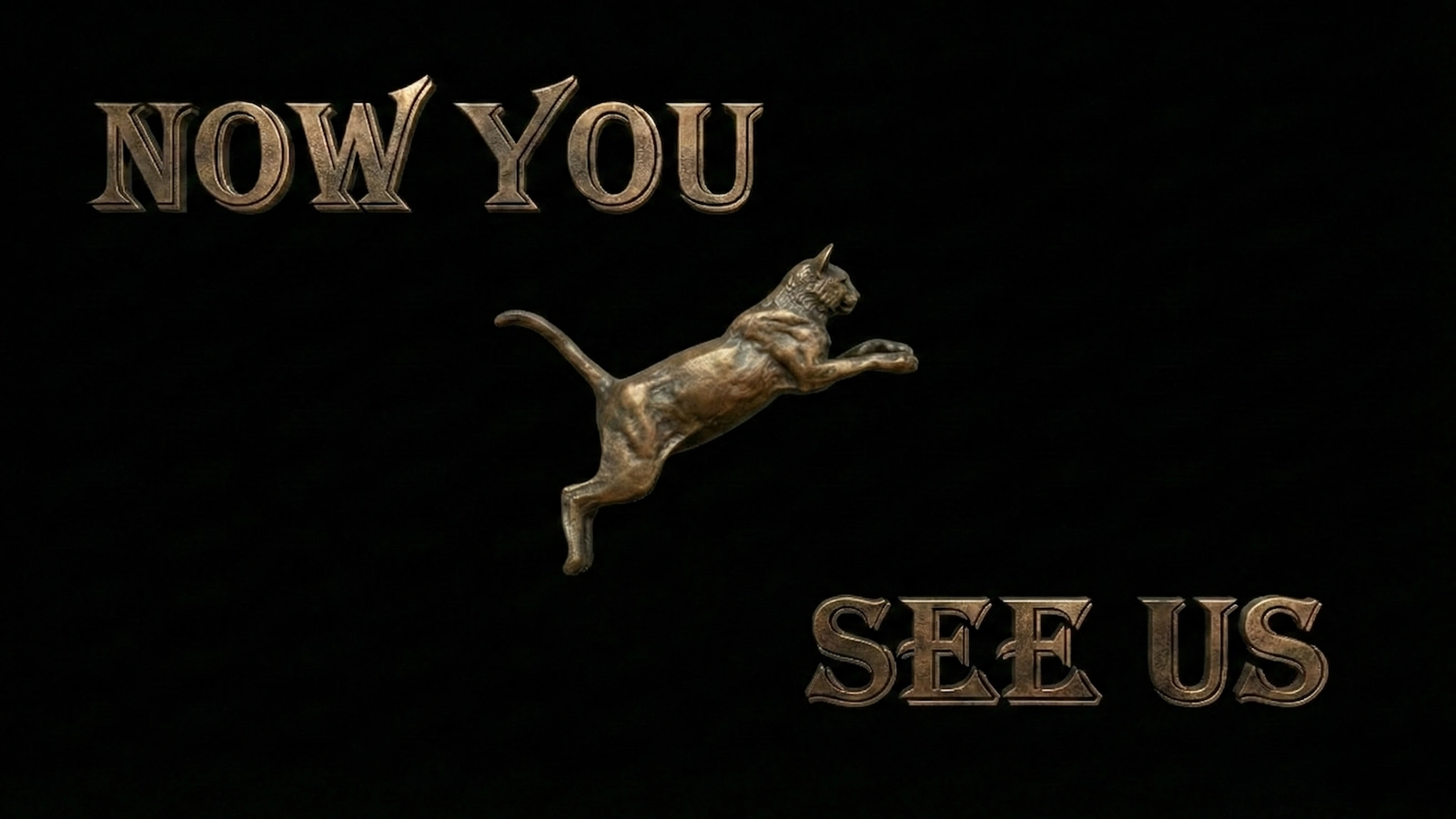
The cat jumps as high as the horse.
A small team. A highly capable team. Invisible for now.
No politics. No hierarchies. No waiting around. Only
speed, decisions.Then results. Now you see us.
Apples
In 1985, after being pushed out from Apple, Steve Jobs founded NeXT. At that time NeXT had a few dozen engineers, Apple had a few thousand.
NeXT began by build high-end workstations for universities, scientists, and developers but by the mid-1990s they had pivoted. Their new focus was almost entirely on software. NeXTSTEP, the operating system they build, was far ahead of its time. Object-oriented development (via Objective-C and NeXT frameworks) made building software radically more productive.
In 1996 a struggling Apple acquired NeXT, bringing Steve Jobs back into the fold, and turning NeXTSTEP into macOS. From there it was upwards and upwards until Apple became what it is today, a multi-trillion company.
And Animals
Now you might wonder how this story is related to our jumping animals. And the way it is related is scaling laws.
In general animals weight scales as the cube of its height (r^3). This is simply because animals are three dimensional objects.
However, the force animals can apply with they muscles scales only as the square of their height. The reason for this is that it is not the volume of the muscle, but rather its area that determines the force it can apply.
Now finally the time that an animal can apply this force for during the jumping motion scales as the height.
And so taking a few assumptions** we arrive at the unintuitive solution that animals jump equally high independent of height. The 50g Frog reaches up to 1m, the 500g rat reaches up to 0.8m, the 5kg cat jumps up to 2m, the 50kg goat reaches 1.5m and the 500kg horse leaps 1.5 meters.
In effect scaling laws of this type appear in the world of technology and innovation also. And so it should come as no surprise that many of our greatest innovations have sprung from small, nimble and motivated teams unencumbered by the weight of a giant corporation.
**This scaling argument is meant in an idealized sense. During the short push-off phase we assume that the leg-generated acceleration greatly exceeds gravitational acceleration so that the animal’s own weight has only a sub-leading effect on the motion while the feet are still in contact with the ground. We also neglect air resistance, so that after take-off the motion is purely ballistic under gravity. Under these assumptions, the jump height is effectively limited by how muscle force and push-off time scale with body size, rather than by gravity or drag during the push-off itself.